On Monday, the children attended a special church service to celebrate the festive season. They sang a wonderful selection of Christmas songs and listened beautifully throughout. We were especially proud of the children from Year 5 who were selected to read out their Christmas prayers and wishes. Their words were thoughtful and heartfelt, making the service even more meaningful for everyone.
Today, our class had an amazing experience watching a LIVE online event from Antarctica! We were joined by the incredible explorer Robert Swan, who shared his adventures in the icy continent and taught us about its wildlife, glaciers, and the importance of protecting our planet.
The children had the chance to send in their questions! It was inspiring to see the wonders of Antarctica up close and learn from someone who has explored it first-hand.
We all left feeling inspired and full of curiosity about our planet and the amazing places still waiting to be discovered!
This week our class embarked on an exciting adventure to Adel Wood! Armed with nothing but our creativity and a sense of adventure, we set out to build the ultimate den.
We scoured the woodland floor, gathering a variety of natural materials like leaves, twigs, and stones. Some teams even found larger branches to create sturdy frameworks for their dens. The air was filled with laughter and the sound of rustling leaves as we worked together to construct our shelters.
Our dens were judged on several criteria, including stability, aesthetics, weatherproofing, and size. Each team worked tirelessly to ensure their den met these standards. In the end, it was Team Wentworth who emerged victorious with their impressive den.
Today, our class learned all about Matthew Henson, one of the first people to reach the North Pole and an extraordinary explorer. His courage, determination, and skills helped his team travel through some of the coldest and toughest conditions on Earth.
We also learned that Matthew Henson faced racial discrimination throughout his life. Even though he was an essential member of the expedition—and may have been the very first person to physically reach the North Pole—he was not given the same credit or respect as his white teammates at the time. Many people didn’t recognise his achievements simply because of the colour of his skin.
The children discussed why this was unfair and why it’s important to make sure everyone is recognised for their talents and contributions. We talked about how history hasn’t always been equal, and how learning about people like Matthew Henson helps us understand the importance of fairness and celebrating everyone’s achievements.
Despite the challenges he faced, Henson showed incredible courage, teamwork, and leadership. His story teaches us about resilience, equality, and the importance of standing up for what is right.
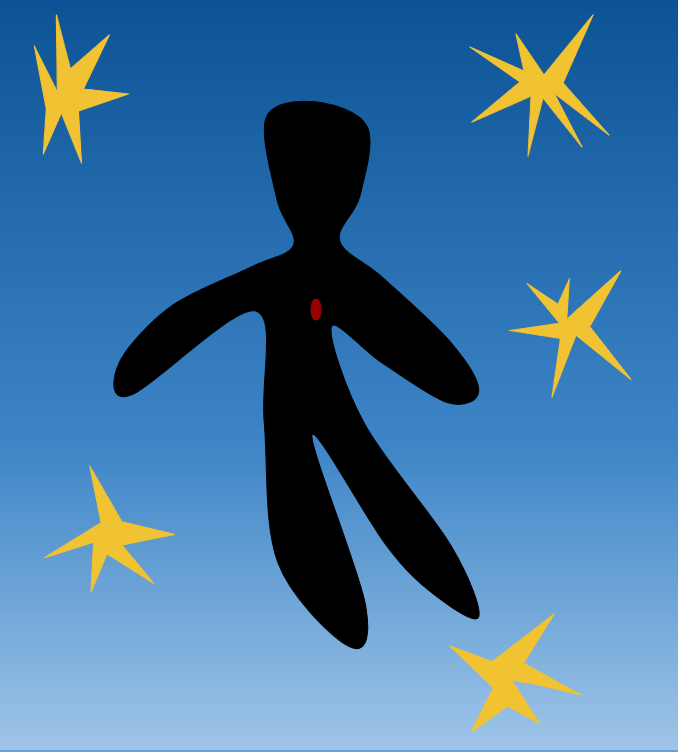
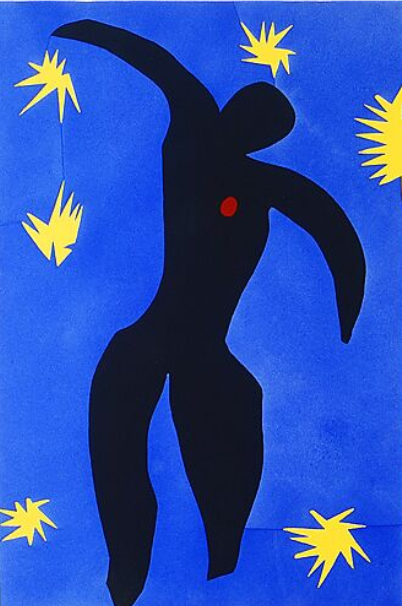
Google drawing interpretation of Henri Matisse – IcarusHenri Matisse – Icarus
In art this week, we explored the work of Henri Matisse, one of the most famous artists of the 20th century. Matisse was known for his bold use of colour and his unique “cut-out” style, which he used later in life when he could no longer paint easily. One of his most famous pieces is Icarus (1947), which shows the mythological figure Icarus falling from the sky after flying too close to the sun.
To connect with Matisse’s work, we used Google Drawings to create our own digital versions of his cut-paper art. Using simple shapes, bright colours, and layers, we tried to capture the same movement and emotion found in Icarus. Even though we were working digitally instead of with scissors and paper, we still had to think carefully about composition, colour balance, and shape design—just like Matisse did!
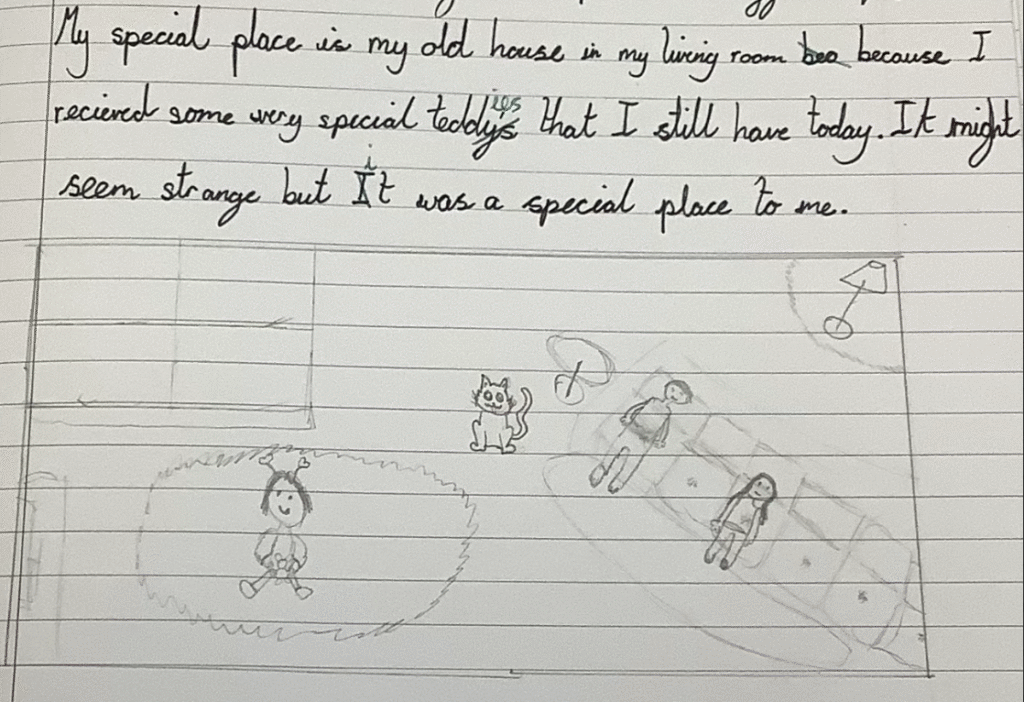
In our RE lesson, we spoke about what makes a place special and why. The children then wrote about there special places and after visualising drew a quick sketch. They then took turn sharing with the rest of the class.
Sometimes the most ordinary places hold the most extraordinary memories. Every special place and memory reminds us that each of us is a unique part of one body, joined together in love.
Last week, our class visited the Royal Armouries, and it was an amazing adventure into the world of ancient warriors! We started with a self-directed gallery tour, focusing on the war sections. We explored armour and weapons used by the Ancient Greeks, Romans and Anglo-Saxons, seeing first-hand how these warriors protected themselves and fought in battle.
After the tour, we took part in two exciting workshops. The first was all about the story of Perseus and Medusa. We got to act out the myth, becoming part of the story as we explored how Perseus defeated the Gorgon and claimed her head. The second workshop was a hands-on Spartan experience. We learned how to be Spartan warriors, using wooden spears and shields and practicing battle techniques just like real soldiers!
It was fascinating to see history come to life and to experience what it might have been like to be a warrior in ancient times. We all left feeling inspired—and a little more battle-ready!
Beginning in the amphitheatre, 5S explored the story of the tributes who were selected to enter King Minos’s impenetrable labyrinth. Moving into the classroom, we then started to learn our model text, closely linked to this Greek Myth. Imaginations were captured and this was a springboard into our fortnight.
Exploring our second myth, Hades and Persephone, we began to consider the symbolism of trees through this classic tale. Why did Ancient Greeks believe we have seasons? What trees are symbolic of the Underworld? Heading outside, we began to study textures of different bark and leaves through tree rubbings; we finished the day by creating an inspiration collage of colour, texture and shape.
Moving on, it was time to bring the trees to life. After deciding on a tree – perhaps a Willow or a Spruce.. or maybe a Birch – we started to build our 3D trees up, using pool noodles, cardboard bases and chicken wire to create malleable branches. Then it was time to mod-roc the entire terrain to create a textured landscape and tree, reminiscent of the tree studies from earlier on in the week. Gradient, acrylic painting was explored and practised alongside using sponges to blot and cover the terrain so there was no white patches left over. The final cherry on top was to consider the type of leaf that may adorn the tree.
Pomegranates are a symbolic fruit to many cultures and societies. For the Ancient Greeks, they represented temptation – a moment when Persephone had accidentally bound herself to the Underworld upon eating six seeds. For this, she had to spend six months in the Underworld where the world withered away; the remaining six she would return to her mother and life would begin to bloom again. This is what Ancient Greeks believed created the Seasons of Autumn, Winter, Spring and Summer. Through still-life sketching, we studied real pomegranates: some whole, some halved. We then moved onto creating these out of plasticine and using different tools to help gouge out sections and cross-hatch the crown on top. Finally, we committed to clay and created full and halved ‘poms’, eventually painting and glazing them. The final task was to create a dinner table, fit for the King of the Underworld, where the pomegranates would lavishly lay. Well done, 5S!